

Year-end tax planning questions are most useful when the bookkeeping is current, the corporation’s cash needs are understood, and important decisions are discussed before they are implemented. The goal is not to apply a generic “tax-saving” tactic. It is to give the owner and advisor enough reliable information to identify filing obligations, cash requirements, documentation gaps and decisions that may need professional review.
For a corporation, the tax year is its fiscal period. The T2 return is generally due within six months after the end of that tax year, but the balance-due day can be earlier. The precise filing, payment and instalment dates depend on the corporation’s circumstances, so they should be confirmed rather than assumed.
For more practical financial and business decision guides, visit the ACCPAS Insights resource centre.
Start with the right year-end picture
Before discussing options, confirm which corporation and reporting period are being reviewed. Use the latest available records, but show clearly where estimates remain.
- Legal name, business number and fiscal year-end
- Year-to-date income statement and balance sheet
- Current bank, credit-card, loan and payment-processor reconciliations
- Accounts receivable and accounts payable listings
- Payroll, GST/HST and corporate-tax account information where applicable
- Major changes in ownership, financing, locations or business activities
Why this matters: filing deadlines and tax-payment dates are tied to the corporation’s tax year, while decisions about cash, owner compensation or purchases depend on the corporation’s actual records and circumstances.
7 essential year-end tax planning questions
These year-end tax planning questions can help identify the records, cash requirements and decisions that should be discussed before the corporation’s fiscal year closes.
1. Are the books complete enough to support a decision?
Review whether all routine transactions have been recorded and whether the key balance-sheet accounts agree with external statements. Large suspense balances, uncategorized transactions, duplicate entries or unexplained owner activity should be identified before planning conclusions are drawn.
- Which accounts are not reconciled?
- Are any invoices, bills or deposits missing?
- Do payroll and GST/HST control accounts agree with filed information?
- Are shareholder advances, reimbursements and personal charges clearly identified?
2. What is expected to happen before the fiscal year-end?
Prepare a short forecast of remaining revenue, expenses, customer collections, supplier payments, payroll, debt payments and major purchases. Separate confirmed transactions from proposals. A forecast helps the advisor understand what is likely to change before the period closes without presenting an estimate as a final result.
3. How much cash does the corporation need?
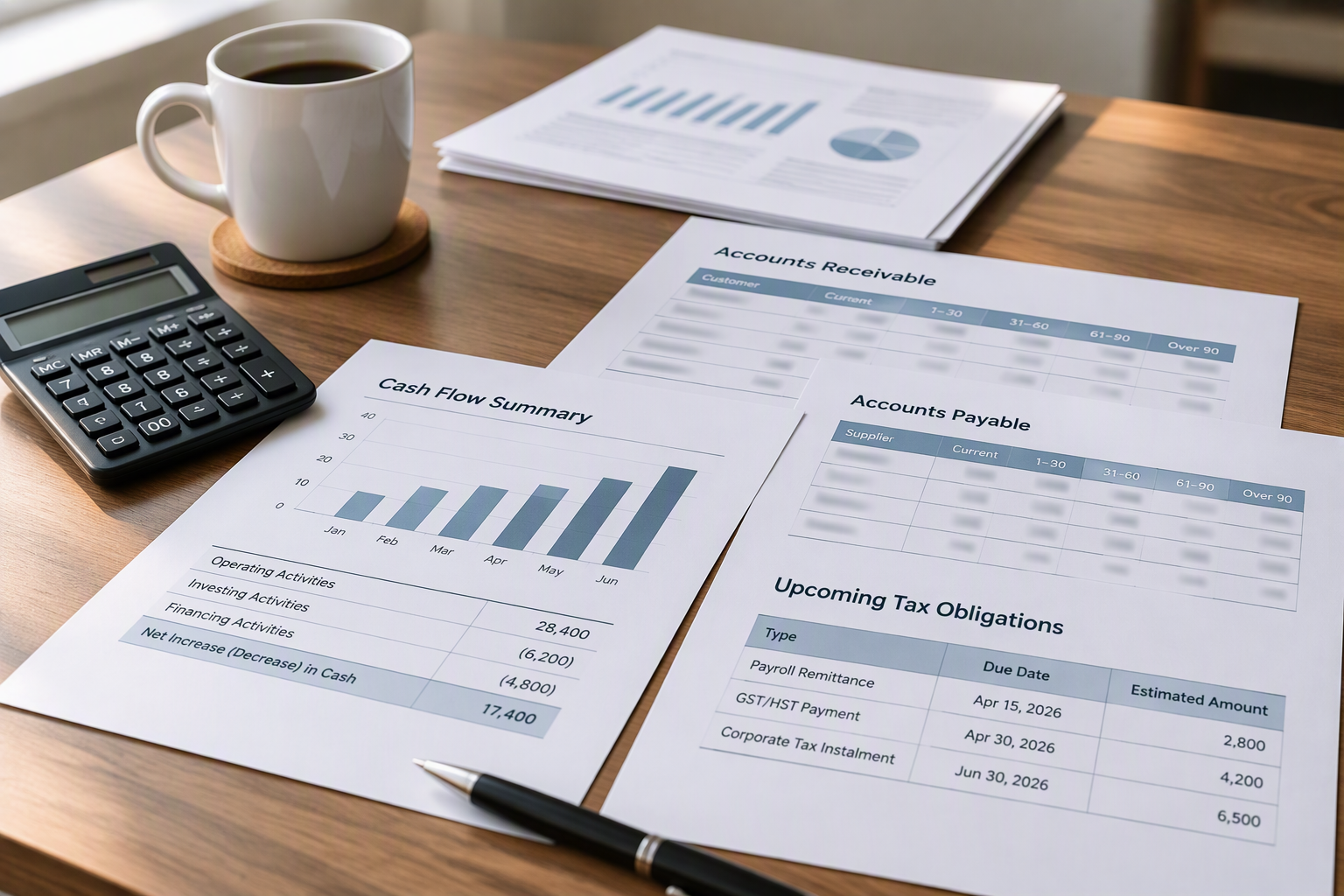
Consider upcoming payroll, supplier obligations, GST/HST, corporate-tax instalments, debt payments and planned investments. Corporate instalment dates depend on the tax year and whether the corporation pays monthly or qualifies to pay quarterly. CRA provides the corporation’s schedule through its online services.
4. Are significant purchases, sales or financing decisions planned?
List proposed equipment purchases, asset disposals, leases, new borrowing, refinancing, grants and other material transactions. The accounting and tax treatment can depend on the agreement, timing, asset type and business use. Obtain advice before completing a material transaction instead of trying to reconstruct the purpose afterward.
5. Are owner payments and withdrawals clearly documented?
Provide the payroll history, dividend records, shareholder-loan ledger, expense reimbursements and planned personal cash requirements. Salary, dividends, reimbursements and shareholder advances have different documentation and reporting considerations. The article should not assume that one method is always better; the appropriate approach depends on the corporation and the owner’s circumstances.
6. Are the corporation’s non-tax filings current?
Tax filing and corporate-registry filing are separate responsibilities. Ontario’s Business Registry states that corporations must keep registry information current and file an annual return through the registry within six months of fiscal year-end. Changes to registry information generally must be reported within 15 days. Confirm the applicable registry obligations for the corporation.
7. Are there unresolved compliance issues?
Bring forward late or amended returns, CRA correspondence, unpaid balances, payroll differences, GST/HST adjustments, prior reassessments and requests for information. Early disclosure allows the advisor to separate routine planning from issues that require correction or a formal response.
Year-end planning discussion checklist
- Current trial balance and year-to-date financial statements
- Reconciled bank, credit-card, loan and payment-processor accounts
- Receivable, payable and inventory information where applicable
- Payroll and GST/HST summaries and CRA account information
- Corporate-tax instalment history and current balance information
- Major asset purchases, disposals, contracts and financing documents
- Shareholder-loan, dividend, salary and reimbursement records
- Forecast of remaining revenue, expenses and cash requirements
- Corporate-registry information and annual-return status
- List of proposed decisions, missing records and questions
Common mistakes to avoid
Reviewing these year-end tax planning questions early can help the owner identify missing information before a filing deadline or material business decision.
- Waiting until the filing deadline to identify missing records
- Treating the filing deadline and balance-due day as the same date
- Making a material purchase or owner-payment decision without reviewing the facts and documentation
- Backdating entries or relabelling completed transactions to obtain a preferred result
- Assuming an online article can replace advice based on the corporation’s records and the owner’s circumstances
How ACCPAS can help
ACCPAS can help turn the records above into a focused year-end review. That may include identifying bookkeeping gaps, organizing tax and remittance questions, reviewing the information needed for corporate tax preparation, and helping the owner understand which decisions require accounting or tax input before year-end. The purpose of the consultation is to clarify the facts and next steps, not to promise a particular tax result.
Ready to prepare for year-end?
Bring the completed checklist, current financial reports and your decision questions.