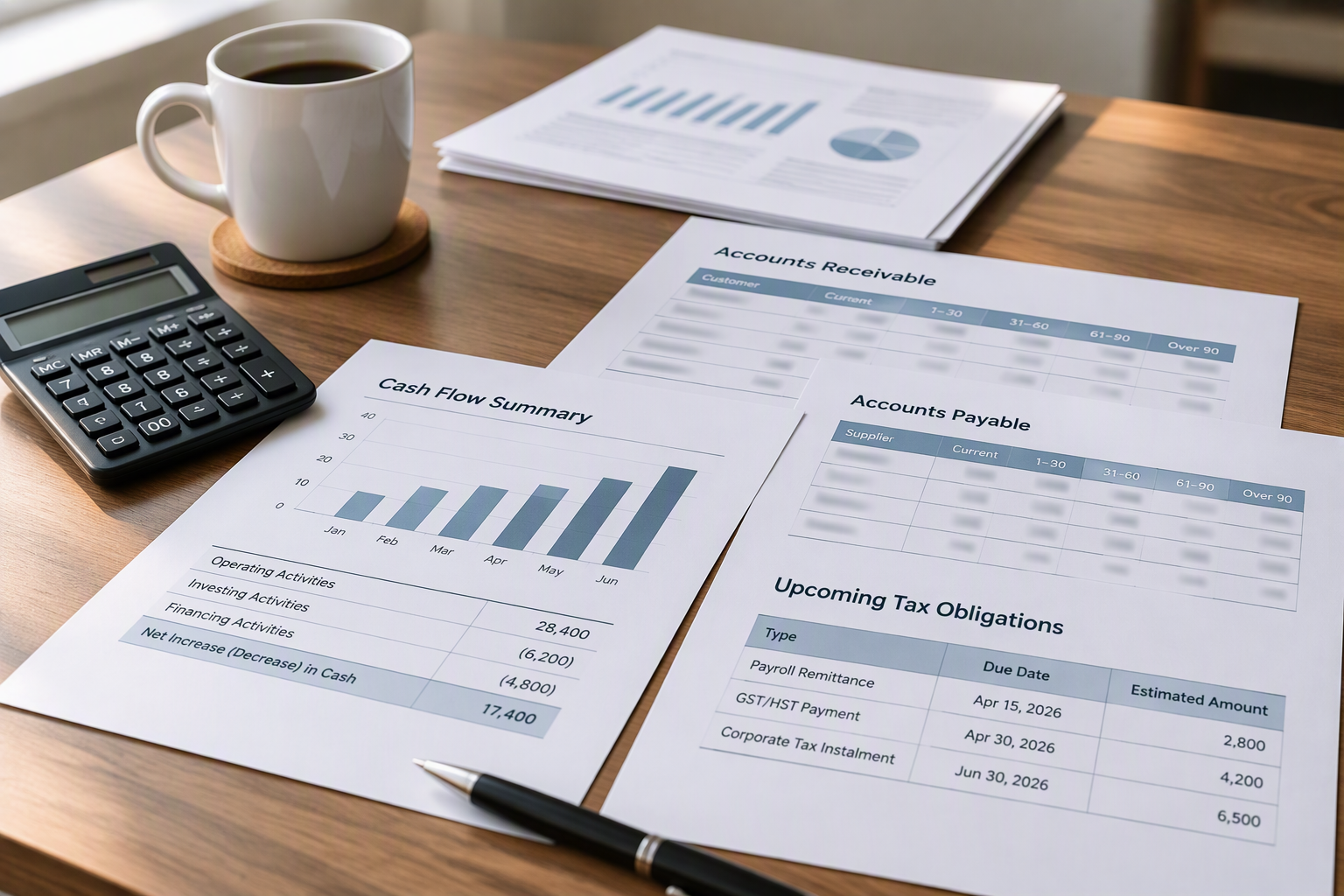

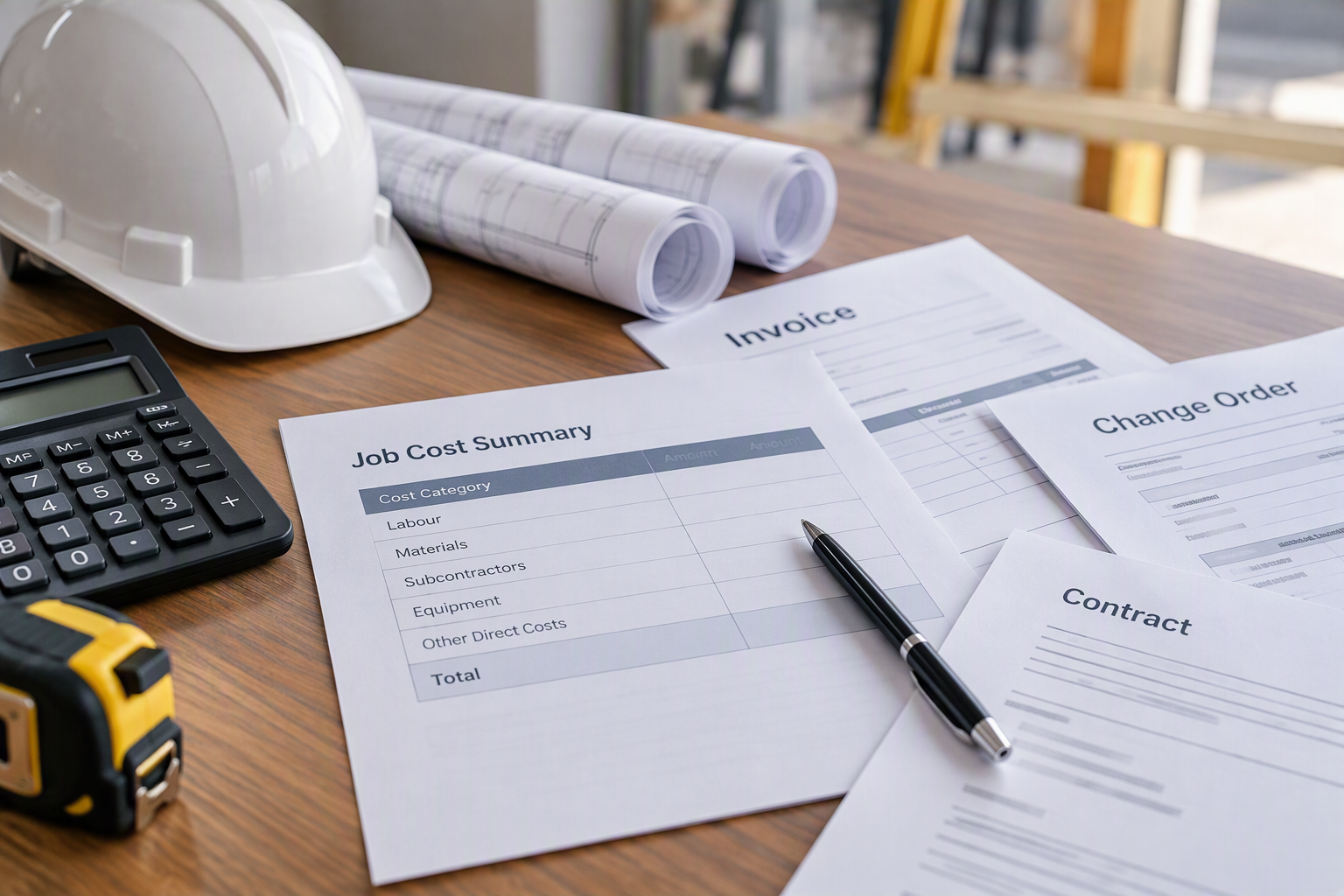
Construction bookkeeping records should connect each transaction to a project, customer, supplier, subcontractor or overhead category. Well-maintained construction bookkeeping records help businesses compare estimated and actual costs, support customer billing and identify project records that require follow-up.
The records should preserve a clear trail from the estimate and contract through change orders, purchases, labour, subcontractor payments, billing, collection and project closeout. Use this guide as a preparation framework rather than as a substitute for project-specific accounting, tax or legal advice.
For more practical bookkeeping and recordkeeping guides, visit the ACCPAS Insights resource centre.
6 essential construction bookkeeping record checks
1. Use a consistent job code
Consistent job codes improve the accuracy of construction bookkeeping records and support reliable job-cost reporting.
Assign one stable job identifier to the estimate, contract, change orders, purchase orders, time records, supplier invoices, subcontractor payments, customer invoices and collection records.
Apply the code consistently across the accounting system and supporting documents. If the identifier changes during the project, retain a cross-reference so the complete activity can still be traced.
2. Separate job costs and overhead
Track labour, materials, equipment, subcontractors, permits and other direct costs consistently by project. Keep general business overhead separate unless the business uses a documented and consistently applied allocation method.
Define the treatment before evaluating project results. Changing cost classifications from one project to another can make comparisons unreliable.
3. Retain contracts and changes
Keep signed contracts, scopes of work, purchase orders, approved change orders, billing approvals, progress-billing records, holdback information and completion documents together.
Clearly distinguish approved changes from pending requests. Do not treat a proposed amount as approved revenue or a confirmed customer commitment without appropriate documentation.
4. Reconcile subcontractor records
Maintain each subcontractor’s legal name, address, identifying information where required, contract, invoices and payment history. Reconcile year-to-date payment totals with the accounting records.
Accurate subcontractor information is an important part of maintaining complete construction bookkeeping records.
T5018 reporting does not automatically apply to every business that purchases construction services. The CRA states that a T5018 slip or equivalent listing is required when the listed conditions are met, including that more than 50% of the payer’s business income comes from construction activities, payments were made to Canadian-resident subcontractors for construction services, and total payments to the subcontractor exceeded $500, excluding GST/HST.
Confirm the reporting requirements from the current facts rather than assuming that every supplier or subcontractor payment belongs on a T5018.
5. Connect payroll and equipment records
Use time records to support labour assigned to individual jobs. Reconcile job-level labour information with payroll records without exposing unnecessary employee information in project reports.
Labour and equipment information should be linked directly to construction bookkeeping records whenever possible.
Retain records for equipment ownership, rentals, operating costs and usage. Distinguish equipment supplied with an operator from ordinary equipment rental where that distinction matters to the records or reporting.
6. Review project status and billing
Compare costs incurred, approved billings, customer collections, open change orders, commitments and the current project status. Identify amounts recorded but not yet billed, billed but not yet collected, and committed but not yet recorded.
Preserve the supporting records and flag uncertain accounting treatment for professional review. A job-cost report should help explain the available information, not replace the underlying documents or professional judgment.
Construction records checklist
Use this construction bookkeeping records checklist to identify completed project records and items that still require follow-up.
- Stable job code used across estimates, contracts and accounting records
- Contracts, purchase orders and approved change orders organized
- Labour and time records assigned to the appropriate jobs
- Materials and supplier invoices assigned consistently
- Direct costs and overhead separated
- Subcontractor information and payment totals maintained
- T5018 applicability reviewed from the current facts
- Customer billings and collections reconciled
- Equipment ownership, rental and usage records retained
- Open commitments and pending changes identified
- Project-status information reviewed
- Missing records and unresolved questions documented
Common construction bookkeeping issues
A construction bookkeeping review may identify project records or balances requiring further investigation. Common issues include:
- Different job codes used for the same project
- Supplier costs recorded without a project identifier
- Labour hours that cannot be traced to payroll or a job
- Personal, overhead and direct project costs combined
- Unapproved change orders included in project results
- Customer billings that do not agree with project records
- Subcontractor payments that do not agree with vendor totals
- Missing subcontractor names or identifying information
- Equipment costs recorded without ownership or rental support
- Old holdbacks, receivables or commitments without explanations
- Duplicate invoices or payments
- Estimates presented as confirmed amounts
- Job-cost reports that cannot be traced to source documents
Document each unresolved matter and retain the available records. If the appropriate accounting, tax or reporting treatment is uncertain, obtain professional advice before changing the records or submitting an information return.
How ACCPAS can help
Effective construction bookkeeping records help construction businesses track project costs, support customer billing, document subcontractor payments and maintain accurate financial information throughout the project lifecycle. Reviewing construction bookkeeping records regularly can help identify issues before they affect project profitability.
ACCPAS can help review your construction bookkeeping records, identify reconciliation or documentation gaps and organize project information for accounting or tax review. That may include job-code consistency, direct-cost records, subcontractor payments, customer billing, equipment records and unresolved project balances.
The objective is a practical, supportable hand-off based on the records that exist. The appropriate accounting and tax treatment depends on the project facts, contracts and supporting documentation.
Need a clearer job-costing and subcontractor-records process?
Bring the job-cost reports, contracts, change orders, supplier and subcontractor records, billing information and list of unresolved questions.
Keep the completed construction bookkeeping records checklist with your construction bookkeeping records, project reports, supporting documents and unresolved-question list for future review.
Sources
CRA: T5018 slip, Statement of Contract Payments
CRA: T5018 Summary, Statement of Contract Payments
CRA: Keeping records
CRA: Electronic record keeping