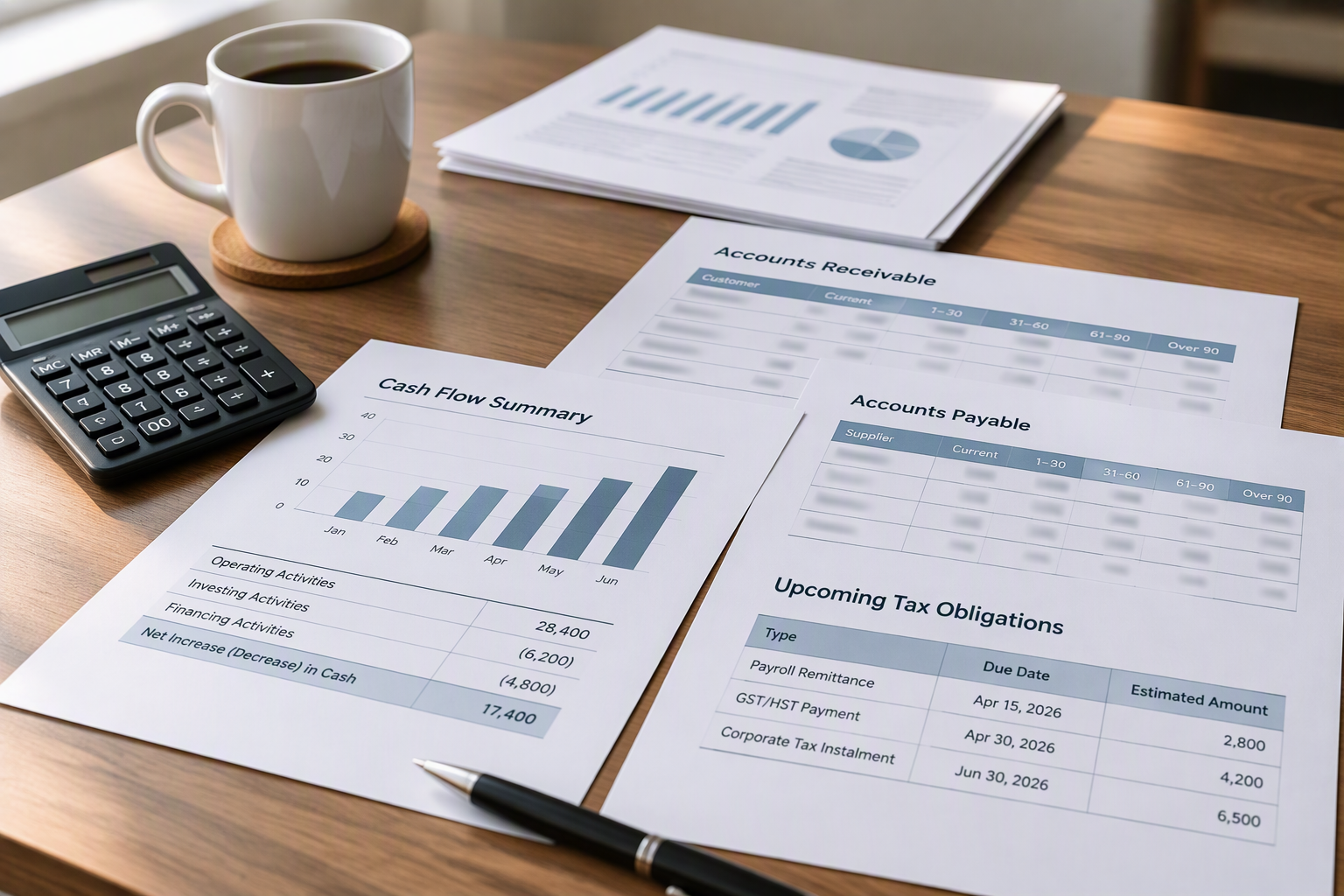


Year-end payroll records should be complete, consistent and supported before employers prepare information slips and summaries. Reviewing employee information, payroll calculations, remittances and special payments early can help identify differences while the supporting records are still readily available.
The purpose of this review is to prepare accurate payroll information and identify questions requiring correction or professional review. It should not be used to relabel completed payments or change the nature of income after the fact.
For more practical tax and accounting preparation guides, visit the ACCPAS Insights resource centre.
1. Confirm employee and account information
Review each employee’s name, address, social insurance number, province of employment and completed TD1 forms. Confirm that the payroll program account and reporting period are correct.
The CRA’s payroll guidance separates employee setup, payroll deductions, remittances and information returns. Identifying incomplete employee information before preparing slips can reduce avoidable follow-up during the filing process
2. Reconcile pay and deductions
Compare the payroll registers with the general ledger, bank records and other payment records. Review gross remuneration, taxable benefits, income tax deductions, CPP contributions and EI premiums.
Payroll records should include relevant employee hours and amounts withheld for income tax, CPP and EI, together with TD1 forms, information slips and filed returns where applicable.
3. Compare remittances with payroll records
Compare the amounts recorded in payroll with the remittance history and available CRA account information. Investigate differences between deductions calculated, amounts remitted and amounts recorded in the general ledger.
Keep a written list of unresolved differences instead of posting an unexplained adjustment simply to make the balances agree.
4. Review special payments and changes
Identify bonuses, commissions, taxable benefits, terminations, leaves, corrections and payments made outside the normal payroll cycle. Confirm that supporting records explain what was paid, when it was paid and how it was recorded.
If the payroll treatment is uncertain, flag the item for review before preparing the final information return.
5. Reconcile slips and summaries
Compare the totals on the payroll slips with the payroll register, general ledger and applicable summary. Confirm that each employee or recipient is included once and that the totals relate to the proper calendar year.
The CRA advises employers not to submit the same slips more than once unless the original submission was rejected.
6. Correct errors without changing the transaction
If a filed slip contains incorrect information, use the applicable amendment, cancellation or replacement process. Complete the required boxes on an amended slip, including information that was correct on the original.
The CRA states that employers cannot use amended slips to change the nature of income, such as retroactively changing salary to dividends. When individual slips are amended, the CRA generally advises employers not to submit an amended summary because the adjustment is completed after the slips are processed.
Year-end Payroll records checklist
Use this year-end payroll records checklist to document completed checks and identify items requiring further investigation.
- Employee master data reviewed
- TD1 and authorization documents retained
- Payroll register agrees with the general ledger
- Deductions and employer contributions reconciled
- Remittances compared with CRA account activity
- Taxable benefits and special payments reviewed
- Slip totals agree with summaries
- Corrections and unresolved differences documented
Common payroll review issues
A year-end payroll review may uncover differences that need investigation before information returns are prepared. Common issues include:
- Employee information that has not been updated.
- Payroll totals that do not agree with the general ledger.
- Special payments recorded outside the regular payroll process.
- Taxable-benefit questions that remain unresolved.
- Remittances that do not agree with payroll deductions.
- Duplicate or omitted slips.
- Corrections without a supporting explanation.
- Government correspondence or unresolved payroll notices
The CRA payroll compliance and enforcement guidance specifically identifies reviews involving withholding and reporting obligations, CPP and EI discrepancies, differences between remittances and amounts reported on slips, and amended or additional slips.
Document each unresolved item and retain the supporting records. If the correct treatment is uncertain, obtain professional advice before filing or submitting a correction.
How ACCPAS can help
ACCPAS can help organize year-end payroll records, reconcile payroll information with the accounting records, identify unexplained differences and prepare a clear list of issues requiring correction or professional review. The objective is an accurate, supportable payroll hand-off, not a guaranteed filing or tax result.
Need help reviewing year-end payroll records?
Bring the payroll registers, remittance history, employee records and unresolved questions.