

Salary, dividends and owner withdrawals are not interchangeable labels. The appropriate treatment depends on what actually occurred, the corporation’s records, the owner’s relationship with the corporation and the applicable tax and corporate requirements.
Review the facts before choosing how to record a payment or changing an existing description. Accounting entries alone do not determine the tax consequences when the underlying transaction shows something different. The CRA’s shareholder-loan guidance emphasizes that tax consequences depend on the actual transactions rather than what the taxpayer might have intended to do.
For more practical business and tax decision guides, visit the ACCPAS Insights resource centre.
How salary, dividends and owner withdrawals differ
This guide compares salary dividends and owner withdrawals so owner-managers can organize the relevant facts, records and questions before making or changing an owner-payment decision.
Salary
Salary and other employment remuneration normally require payroll records, source-deduction calculations, remittances and applicable information slips. The records should identify the period, amount, payment date and payroll treatment.
Review whether the payment was processed through payroll and whether deductions, employer contributions and remittances agree with the accounting records. Do not assume that any payment made regularly to an owner is automatically salary.
Dividends
Dividends are corporate distributions to shareholders. The available share rights, ownership information, declaration, payment records and corporate documentation should be reviewed before treating an amount as a dividend.
A corporation may have more than one class of shares, and the rights attached to those classes are established in its articles. Corporations Canada states that the right to receive dividends must be assigned through the corporation’s share structure, subject to the articles and applicable corporate requirements.
Do not describe a withdrawal as a dividend merely because the recipient is a shareholder. Confirm that the payment and supporting records are consistent with the proposed treatment.
Owner or shareholder withdrawals
A withdrawal should remain visible in the accounting records until the underlying transaction is understood. It may represent salary, a dividend, a reimbursement, repayment of an amount owing, a shareholder loan, a shareholder benefit or another transaction.
The CRA states that a payment to a shareholder outside a good-faith business transaction, payment of personal expenses or personal use of corporate property may create a shareholder-benefit issue. Whether a benefit was received as an employee or as a shareholder is a question of fact that must be considered for each benefit.
Shareholder loans and debts can also create income inclusions, subject to specific statutory exceptions and repayment rules. The CRA’s folio is technical and should be applied to the facts of the particular transaction and tax year.
Do not rewrite completed transactions
Do not change the description of a completed transaction solely to obtain a different result. Review what occurred, when the amount was paid, how it was recorded, what documentation exists and whether payroll or information reporting has already been completed.
The CRA states that filed slips cannot be amended to change the nature of income, such as changing salary to dividends.
7 helpful owner-payment review questions
Reviewing salary, dividends and owner withdrawals together helps identify the records, approvals and reporting that may apply to each payment.
1. What actually occured?
Identify the payment date, amount, recipient, source account and original business purpose. Determine whether funds were paid directly, transferred between accounts, used for personal expenses or recorded through payroll.
2. In what capacity did the owner receive the amount?
An owner may also be a shareholder, director, officer or employee. The capacity in which a benefit or payment was received can affect the analysis. The CRA distinguishes benefits received as an employee from benefits received because of share ownership.
3. What records and approvals exist?
Gather payroll records, corporate resolutions, shareholder records, expense reports, reimbursement support, loan agreements and bank documents. Identify missing or unsigned documentation rather than creating retroactive records without professional advice.
4. What does the shareholder-loan ledger show?
Review advances, repayments, owner-paid expenses, corporate payments of personal expenses and year-end balances. Confirm whether the ledger agrees with the supporting transactions.
Do not assume that repayment automatically resolves every tax issue. The CRA’s shareholder-loan folio discusses specific exceptions, repayment timing and series-of-loans-and-repayments considerations.
5. What cash does the owner and corporation need?
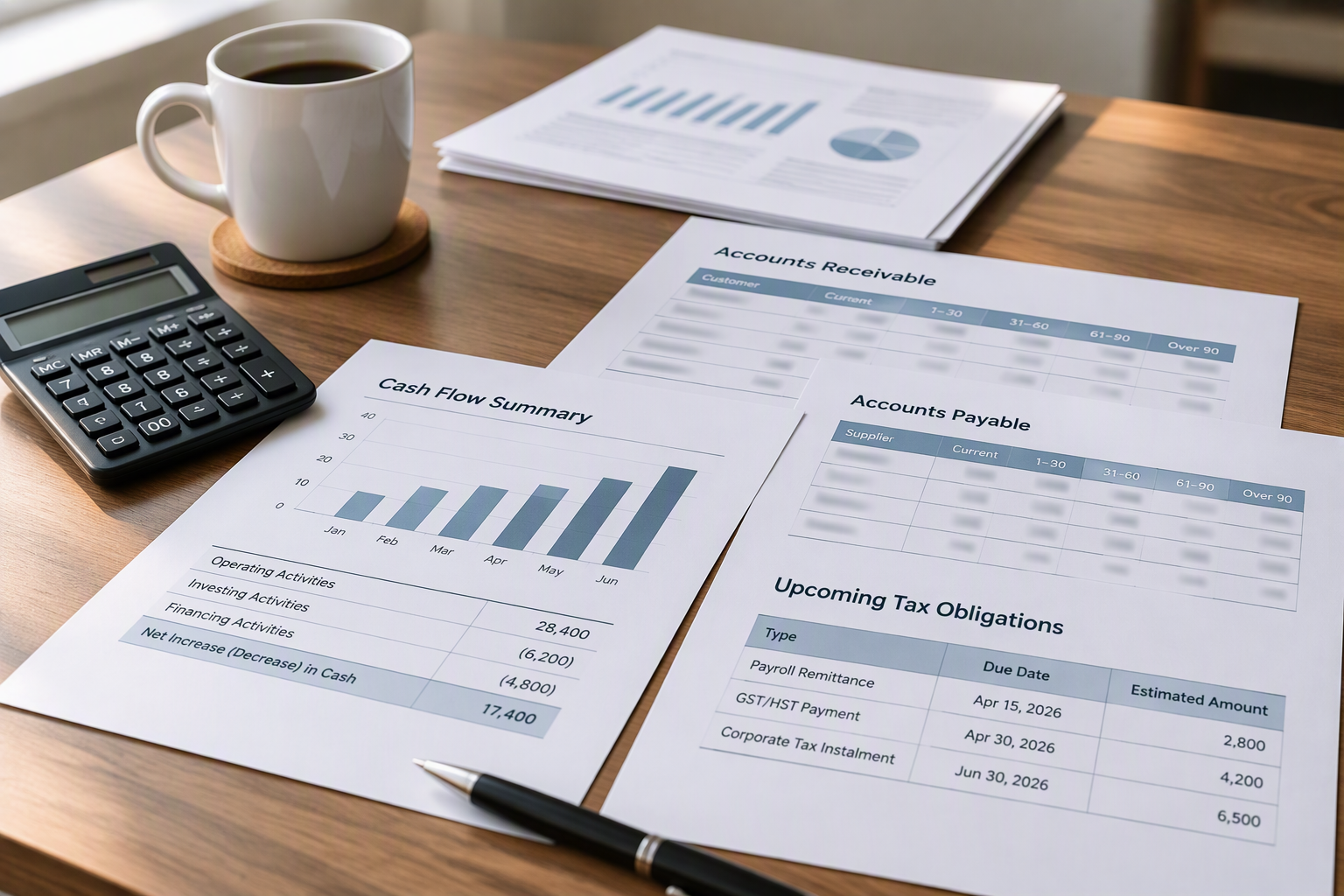
Prepare a realistic summary of the owner’s personal cash requirements and the corporation’s expected operating, financing, payroll, tax and investment needs.
Cash needs are one input into the discussion, not a substitute for reviewing the legal, accounting and tax requirements.
6. What payroll or information reporting has already occurred?
Identify payroll processed, deductions remitted, slips issued and other reporting already completed. Corrections should follow the applicable process and should not be used to rewrite the underlying transaction.
7. What requires CPA or legal review?
Flag uncertain classifications, material shareholder balances, unusual repayments, corporate-law questions and transactions involving incomplete documentation. Tax, accounting and corporate-law considerations may require different professional input.
Reviewing salary dividends and owner withdrawals together can help identify missing records, unresolved shareholder balances and reporting that has already occurred.
Owner-payment discussion framework
Use this salary, dividends and owner withdrawals framework to organize the facts before recording or changing an owner-payment transaction.
- Current financial results and forecast
- Owner’s personal cash requirements
- Corporation’s operating and financing requirements
- Payroll and remittance history
- Dividend declarations, resolutions and payment records
- Current shareholder and share-class information
- Shareholder-loan ledger and supporting transactions
- Owner-paid expenses and reimbursements
- Personal expenses paid by the corporation
- Planned payments or withdrawals and intended timing
- Information slips or reporting already completed
- Questions requiring CPA or legal review
Common owner-payment issues
- Payments recorded without identifying their purpose
- Personal expenses paid directly by the corporation
- Payroll amounts that do not agree with remittances or slips
- Dividends without complete ownership or corporate records
- Old shareholder-loan balances without transaction support
- Owner-paid expenses or reimbursements without clear supporting records
- Repayments that are not matched to the original advances
- Completed payments reclassified after reporting
- Planned withdrawals considered without reviewing corporate cash needs
Keep uncertain items visible and document the available facts. Obtain professional advice before changing the classification or reporting of a material owner transaction.
How ACCPAS can help
ACCPAS can help organize records related to salary, dividends and owner withdrawals, including payroll history, dividend documentation, shareholder balances and owner reimbursements.
The objective is a documented, fact-based discussion. ACCPAS does not assume that one payment method is appropriate for every owner or promise a particular tax result.
Preparing to review owner compensation or shareholder balances?
Bring the current financial records, payroll history, dividend documents, shareholder ledger and planned-payment questions.
Keep the completed salary dividends and owner withdrawals framework with the financial records, corporate documents and list of outstanding questions for professional review.
Sources
CRA: Payroll
CRA: Shareholder benefits
CRA: Shareholder loans and debts
CRA: Loans and employee debt
Corporations Canada: Share structure and shareholders
CRA: Amend, cancel, add or replace slips and summaries