
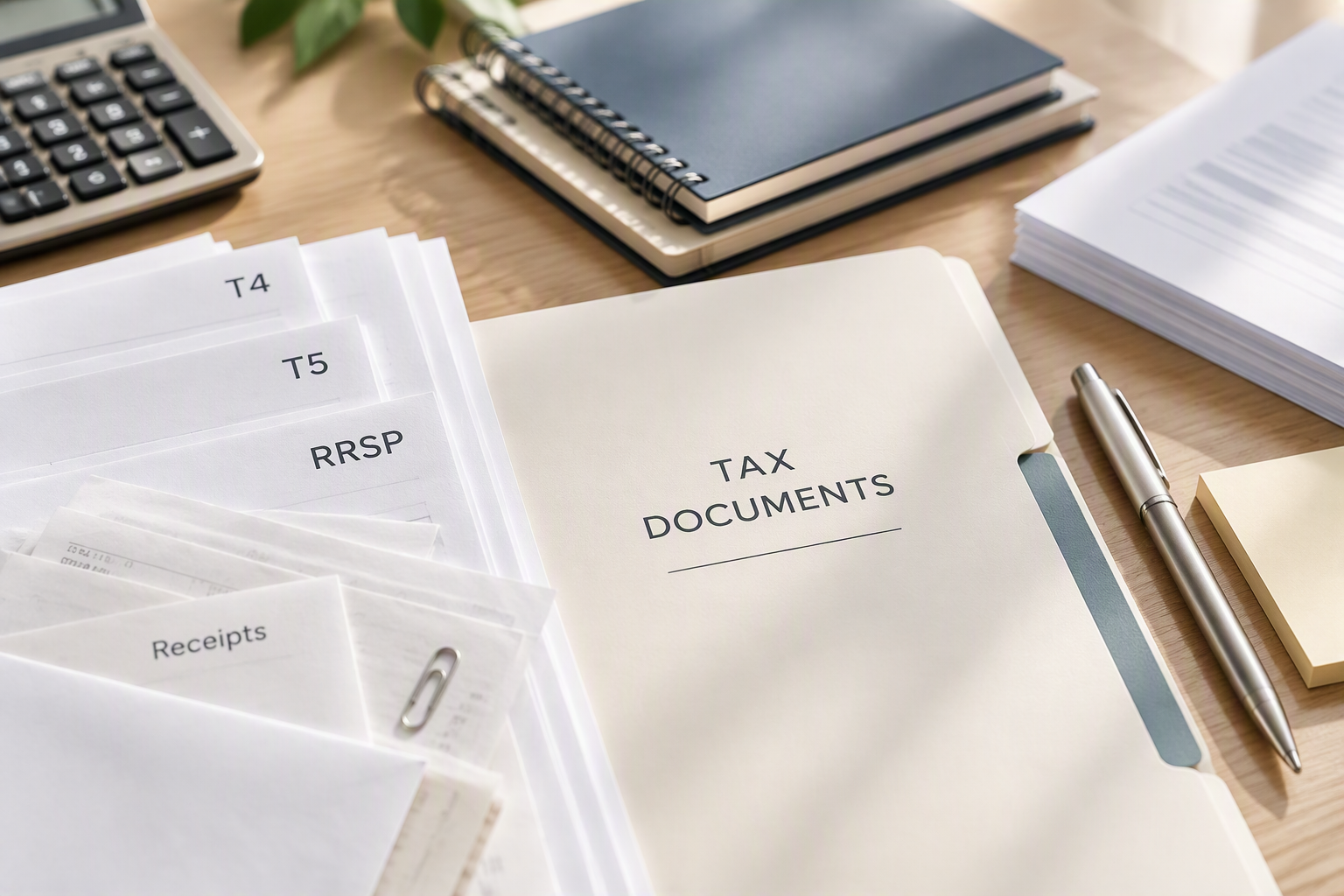
A personal tax organizer can help you gather income slips, receipts, prior tax records and supporting documents before tax preparation begins. The exact documents depend on your income sources, family situation and transactions during the year, so use this guide as a starting point rather than a complete list for every taxpayer.
Clearly identify documents that are missing, amended or uncertain. This allows the preparer to distinguish verified information from matters that still require follow-up.
This personal tax organizer covers the main document categories to review, but the exact records required will depend on each taxpayer’s circumstances.
For more practical tax and accounting preparation guides, visit the ACCPAS Insights resource centre.
1. Confirm personal and family information
Confirm your current mailing address, contact information, marital status and relevant dependant information. Identify changes that occurred during the year rather than assuming the information from the previous return is still current.
Some personal-information changes should be reported to the CRA separately. The CRA provides online processes for updating an address, phone number, email address, name, direct deposit and marital status.
2. Gather prior-year tax information
Provide your most recent notice of assessment or reassessment, the prior return where relevant, unused-amount information and any CRA correspondence received during the year.
The most recent notice of assessment may also contain the NETFILE access code used when filing electronically, although the CRA states that providing the access code is not mandatory.
3. Collect all available income slips
Collect the slips that apply to your situation, including employment, pension, investment, benefit, trust, partnership and tuition slips.
The CRA says most slips and receipts should be received by the end of February. T3 and T5013 slips may not arrive until the end of March, and receipts for some RRSP or PRPP contributions made during the first 60 days of the year may arrive later.
If an expected slip is missing, check whether it is available through your CRA account and contact the issuer when necessary. Keep a written list of outstanding slips so missing information is not mistaken for confirmed zero income.
4. Organize receipts for deductions and credits
Organize the supporting records for claims that may apply, such as RRSP contributions, medical expenses, charitable donations, childcare expenses, moving expenses or employment expenses.
Eligibility and documentary requirements differ by claim and should be confirmed rather than assumed. The CRA maintains separate guidance for deductions, credits and expenses, including family, childcare, education, employment, pension and savings-plan topics.
5. Include self-employment or rental information
If you earned self-employment or rental income, provide a summary of income and expenses together with the relevant source documents, asset purchases and records of any applicable GST/HST activity.
Keep personal and business transactions clearly separated. The CRA identifies self-employment income as income from activities such as a business, profession or commission activity, and provides separate reporting guidance for rental income.
6. Identify investments and property transactions
List significant investment and property transactions, including purchases, sales, transfers and dispositions. Gather statements, trade confirmations, purchase information and other available records that may be relevant.
Do not assume that a statement or information slip contains every amount needed to determine the reporting treatment. Flag uncertain cost information or unusual transactions for professional review.
7. Record missing or amended documents
Identify any missing, corrected or amended slips and documents. Record the issuer, tax year, expected document and follow-up status.
A written missing-document list helps prevent an estimate or incomplete record from being treated as final information. If material information remains unavailable, discuss the appropriate filing approach before the return is submitted.
8. Prepare questions before filing
Prepare a short list of changes and questions that may affect the return. Examples include a move, change in marital status, new dependant, self-employment activity, rental property, property sale, foreign income, investment transaction or CRA notice.
The list should identify the facts and documents available. The appropriate tax treatment should be determined from the applicable rules and the taxpayer’s circumstances.
Personal tax organizer checklist
Use this personal tax organizer to mark the documents already gathered and identify items that still require follow-up.
- Current contact, marital-status and dependant information
- Most recent notice of assessment or reassessment
- Relevant CRA correspondence
- All available employment, pension and benefit slips
- Investment, trust and partnership slips
- Tuition and education documents where applicable
- RRSP and other contribution receipts
- Medical-expense, charitable-donation and childcare records
- Moving or employment-expense support where applicable
- Self-employment or rental summaries where applicable
- Investment and property transaction records
- List of missing, amended or uncertain documents
- Questions and material changes to discuss before filing
Completing the personal tax organizer early can make missing slips, unclear transactions and unanswered questions easier to identify.
Common preparation issues
A document review may identify items that require additional information or professional consideration before filing. Common issues include:
- Missing, late or amended income slips.
- Personal information that differs between records.
- Receipts without enough detail to identify the related claim.
- Investment or property transactions with incomplete cost information.
- Personal and self-employment expenses recorded together.
- Self-employment or rental activity without complete summaries.
- CRA correspondence that has not been addressed.
- Foreign income or property questions requiring review
- Estimates that are not clearly identified as estimates
Document each unresolved issue and retain the supporting records. If the correct reporting treatment is uncertain, obtain professional advice before submitting the return.
How ACCPAS can help
ACCPAS can help review your personal tax organizer, identify missing documents and prepare a clear list of matters requiring follow-up before filing.
The objective is a more complete, supportable preparation process. The appropriate reporting treatment and result depend on the taxpayer’s individual circumstances.
Want a more organized personal tax package before filing?
Bring your available slips, receipts, latest notice of assessment and list of missing documents or questions.
Keep the completed personal tax organizer with the supporting records and list of outstanding questions for the tax-preparation discussion.
Sources
CRA: Tax slips
CRA: Preparing to do your taxes
CRA: Get ready to file a tax return
CRA: Reporting income
CRA: Claiming deductions, credits and expenses
CRA: Update your personal information
CRA: Self-employment income
CRA: Rental income