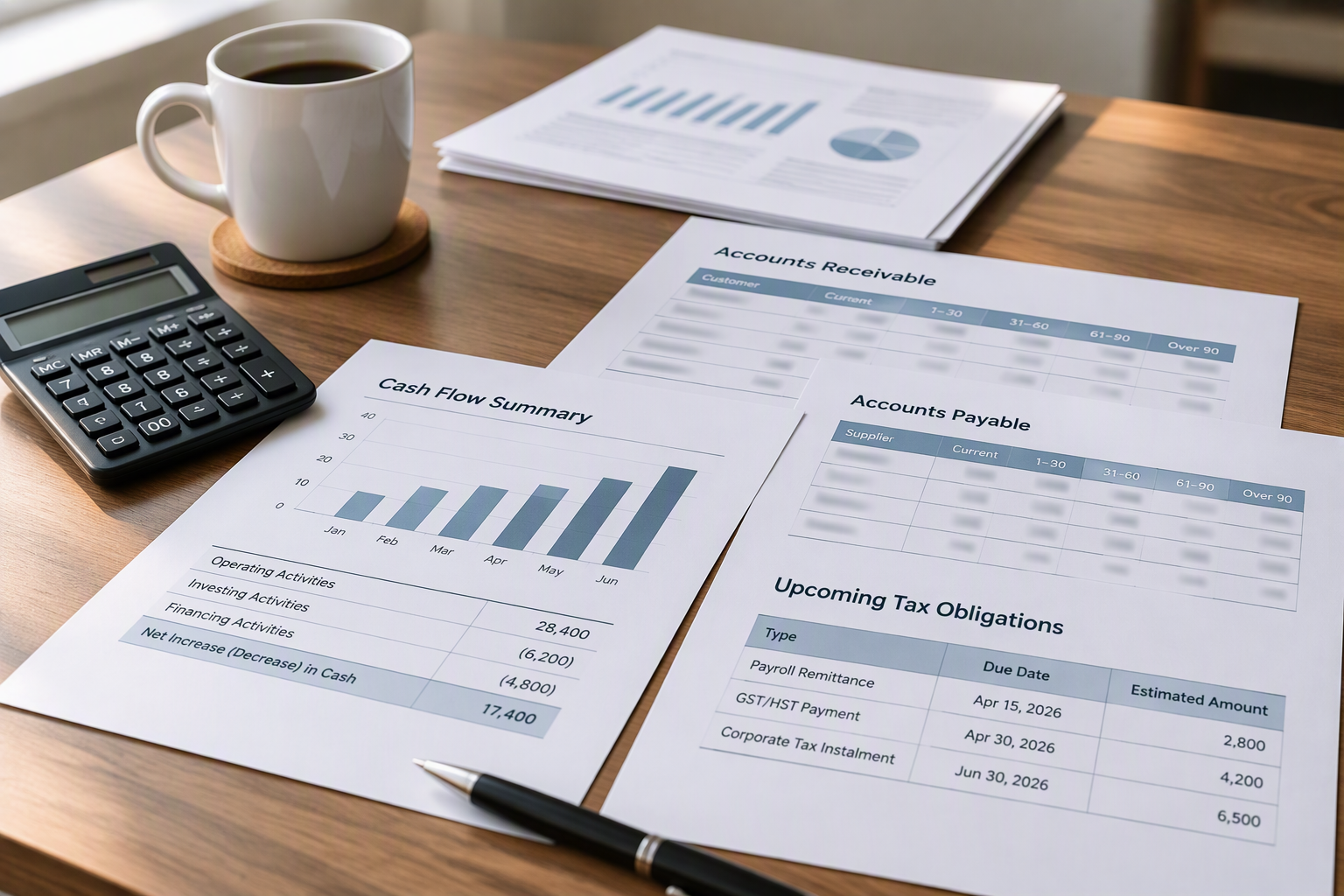


GST/HST filing readiness starts with complete sales records, supported purchase records and reconciled GST/HST accounts. Before preparing a return, confirm that the legal entity, program account and reporting period are correct and that the amounts being reported can be traced to the accounting records.
Filing electronically does not replace the need for adequate supporting records. GST/HST registrants must retain records that support the amounts collected, payable, refunded, rebated or deducted from net tax.
This GST/HST filing readiness guide covers six practical checks for organizing sales, purchases, adjustments, reconciliations and filing records.
For more practical tax and accounting preparation guides, visit the ACCPAS Insights resource centre.
1. Confirm the account and period
Confirm the legal entity, GST/HST program account, reporting period, filing frequency and return due date. Use the exact account and reporting period shown in the CRA records.
GST/HST registrants must file a return for every reporting period, including periods with no business activity, no net tax to remit or a final return when closing an account. Most registrants are required to file electronically, subject to the CRA’s listed exceptions and exemption process.
2. Reconcile sales and tax collected
Compare sales reports, invoices, point-of-sale or platform reports, bank deposits and amounts recorded in the general ledger. Investigate differences between recorded revenue and amounts deposited.
Identify exempt, zero-rated, taxable and out-of-scope transactions where applicable rather than assuming all revenue receives the same GST/HST treatment. Keep enough information to explain how the tax collected or payable was determined.
3. Support input tax credits
Keep invoices, receipts or written agreements supporting business purchases. Confirm that the documents contain enough information to identify the supplier, purchaser, transaction and GST/HST charged.
Input tax credits generally relate to GST/HST paid or payable on purchases and expenses used in commercial activities. Eligibility may be limited by the nature of the expense, the extent of commercial use and the available supporting documentation.
The CRA requires businesses claiming input tax credits to keep copies of relevant invoices or receipts and identifies specific documentary information needed to support a claim.
4. Review timing and adjustments
Identify credit notes, returned sales, bad debts, rebates, prior-period corrections and unusual transactions. Document the period affected and retain the related invoices, credit notes, correspondence and calculation.
Do not move amounts between reporting periods merely to make the return agree with the accounting records. Flag uncertain timing or treatment for professional review.
5. Reconcile GST/HST control accounts
Compare the bookkeeping GST/HST accounts with previously filed returns, payments, refunds and the available CRA account information.
Explain differences relating to another period, payments applied to a different account, unrecorded adjustments or prior filings. Keep a written list of unresolved differences rather than posting an unsupported adjustment.
6. Retain the filing and payment records
Save the return confirmation, payment confirmation, working papers and final reconciliation with the reporting period’s records.
Businesses filing electronically generally do not send receipts and supporting documents with the return, but they must retain the records in case the CRA requests them. The CRA states that GST/HST records generally must be retained for six years from the end of the year to which they relate, although longer retention may be required in some circumstances
GST/HST readiness checklist
Use this GST/HST filing readiness checklist to document completed checks and identify information that still requires follow-up.
- Legal entity and GST/HST program account confirmed
- Reporting period and filing deadline confirmed
- Sales and tax collected reconciled
- Exempt, zero-rated and unusual transactions reviewed where applicable
- Purchase invoices and receipts retained
- Input tax credit eligibility and documentary support reviewed
- Credit notes, bad debts and prior-period adjustments documented
- GST/HST control accounts reconciled
- Return and payment amounts reviewed
- Filing confirmation and payment proof retained
- Missing records and unresolved questions documented
Common GST/HST preparation issues
A readiness review may identify records or balances requiring investigation before filing. Common issues include:
- Sales totals that do not agree with deposits or platform reports
- Tax collected but not recorded in the GST/HST control account
- Purchase records missing supplier or tax informationInput tax credits claimed without adequate documentary support
- Personal and business purchases combined together
- Credit notes or returned sales recorded in the wrong period
- Prior returns that do not agree with the current control-account balances
- Payments applied to the wrong program account or reporting period
- Exempt, zero-rated or unusual transactions requiring review
- Estimates that are not clearly identified as estimates
Document each unresolved item and retain the available support. If the correct GST/HST treatment or reporting period is uncertain, obtain professional advice before filing.
How ACCPAS can help
ACCPAS can help review your GST/HST filing readiness, organize supporting records, reconcile relevant accounts and identify unexplained differences between the bookkeeping records and prior filings.
Where transactions involve uncertain tax status, timing or input tax credit support, the available facts can be organized for professional review. The objective is a complete, supportable filing process, not a guaranteed result.
Need help preparing GST/HST records before filing?
Bring the sales reports, purchase records, prior returns and list of unresolved differences or questions.
Keep the completed GST/HST filing readiness checklist with the return confirmation, payment records and supporting working papers.
Sources
CRA: Calculate and prepare to report GST/HST
CRA: Reporting requirements and deadlines
CRA: Instructions for preparing a GST/HST return
CRA: Input tax credits
CRA: GST/HST and payroll records
CRA: GST/HST records to keep