
A year-end records checklist can help small-business owners organize financial information, identify missing documents, and prepare for upcoming accounting and tax work. A structured review can also make it easier to answer questions from an accountant and reduce delays caused by incomplete records.
The year-end records checklist below covers the main financial documents and balances a small business may need to review.
For more practical financial and business decision guides, visit the ACCPAS Insights resource centre.
Review income records
This section of the year-end records checklist focuses on confirming that reported income is supported by invoices, receipts, deposit records, and other source documents.
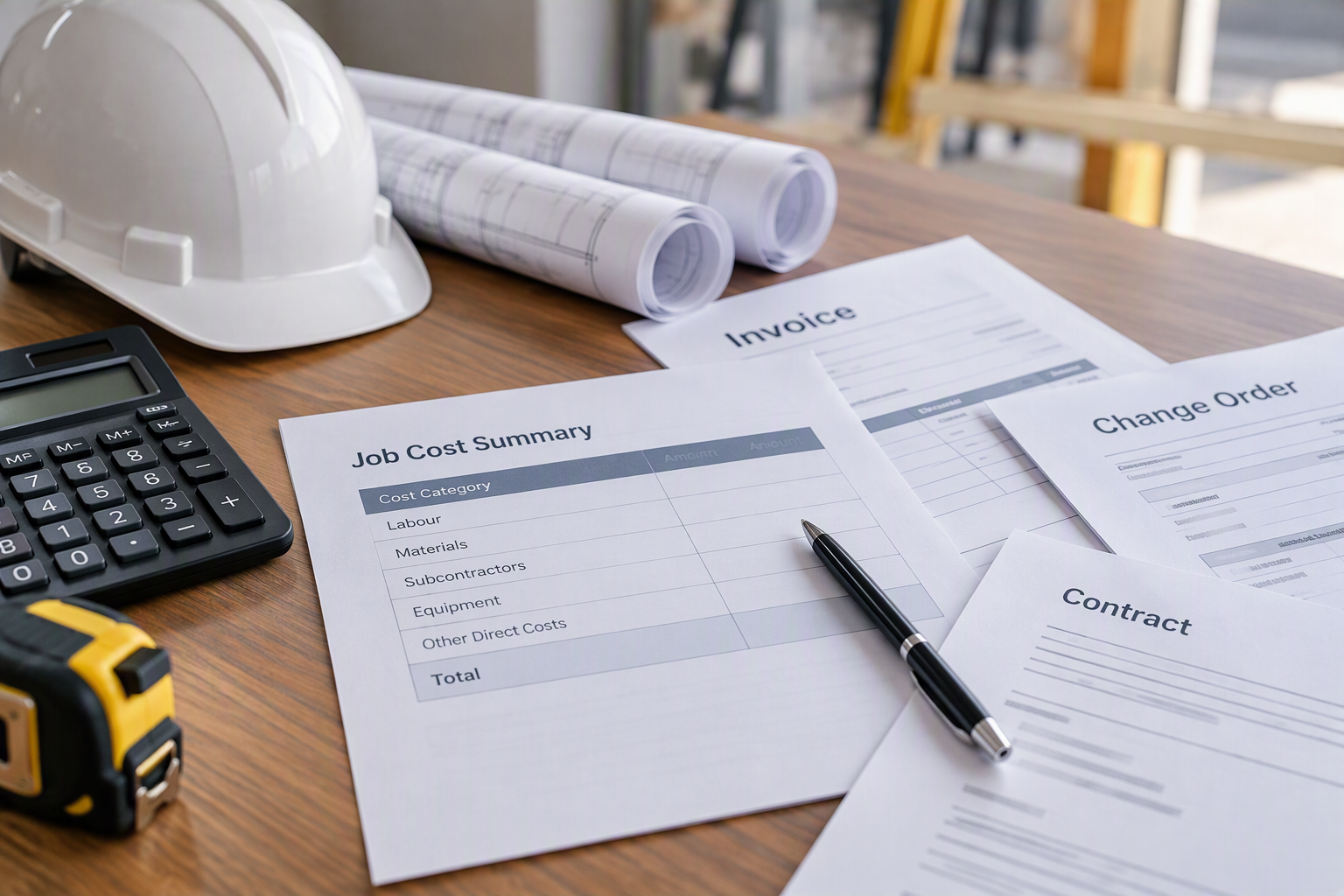
Start by confirming that recorded sales and other business income agree with the available supporting documents.
Gather records such as:
- Sales invoices
- Receipts
- Bank deposit records
- Fee statements
- Contracts
- Reports from payment-processing or point-of-sale systems
Income records should identify the date, amount, and source of the income. The Canada Revenue Agency also states that income entries should be supported by original documents.
Compare these records with the income shown in the bookkeeping system and note any differences that still need investigation.
Organize expense documents
Collect the invoices, receipts, statements, and other vouchers supporting business expenses.
Consider arranging expenses into consistent categories, such as:
- Advertising and promotion
- Office expenses
- Insurance
- Professional fees
- Maintenance and repairs
- Meals and entertainment
- Vehicle-related costs
- Software and subscriptions
Receipts and other vouchers should contain enough information to explain the purchase, including the date, supplier, buyer, and description of the goods or services.
Keep business and personal expenses clearly separated. If a purchase has both business and personal use, flag it for review rather than making an unsupported allocation.
Reconcile financial accounts
Reconciliation is an important part of the year-end records checklist because it can reveal missing transactions, duplicates, and unresolved balances.
Compare the bookkeeping records with the year-end statements for:
- Business bank accounts
- Credit cards
- Loans and lines of credit
- Payment-processing accounts
- Other accounts used for business transactions
Identify outstanding deposits, unrecorded charges, duplicate entries, and older unreconciled transactions. Record unresolved items on a separate follow-up list so they are not overlooked.
Review customer and supplier balances
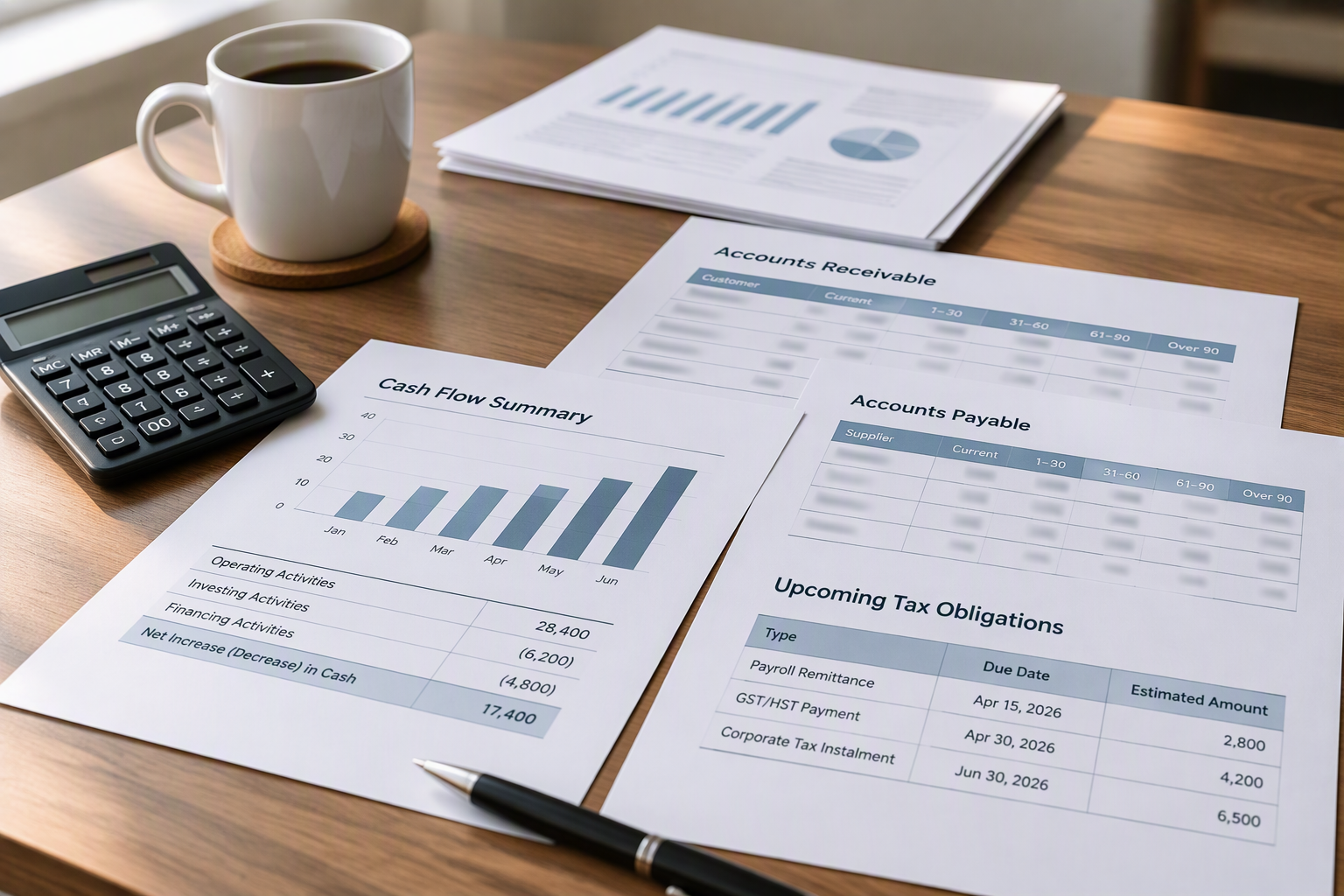
Review amounts owed by customers and compare the balances with invoices, payments, and credit notes.
Also review amounts owed to suppliers. Confirm that unpaid bills are recorded and that payments have not been entered twice.
Do not remove an older balance solely because it appears unlikely to be collected or paid. Flag the item for professional review and retain its supporting documents.
Gather GST/HST and payroll information
GST/HST registrants must maintain records with enough detail to determine applicable tax and calculate amounts collected, payable, refundable, or deductible. Purchase invoices and receipts may be needed to support input tax credit claims.
If the business has employees, gather payroll summaries and withholding records. The Canada Revenue Agency identifies information such as hours worked and amounts withheld for CPP contributions, EI premiums, and income tax among the payroll records employers must maintain.
Review assets and major purchases
The year-end records checklist should also identify significant property purchased, sold, or financed during the year.
Prepare a list of equipment, computers, furniture, vehicles, and other significant property purchased or disposed of during the year.
For each item, retain:
- Purchase or sale date
- Invoice or agreement
- Description of the property
- Purchase or sale amount
- Financing information, where applicable
Keep these items separate from routine operating expenses so an accountant can review the appropriate treatment.
Create a follow-up list
Not every year-end question can be resolved immediately. Create a separate follow-up list for missing documents, unexplained transactions, customer or supplier balances, unreconciled amounts, and questions requiring professional review.
For each outstanding item, record:
- The account or transaction involved
- The amount, if known
- The supporting document that is missing
- The person responsible for following up
- The date by which the item should be resolved
A documented follow-up list can help prevent unresolved items from being overlooked when records are provided to an accountant. It also creates a clear distinction between completed bookkeeping work and matters that still require investigation.
Include the follow-up list with the completed year-end records checklist so the accountant can quickly identify outstanding questions.
Back up electronic records
Review how electronic accounting records and supporting documents are stored. Confirm that files are readable, organized consistently, and backed up in accordance with the business’s approved recordkeeping process.
Where records are stored through accounting software, cloud storage, payment-processing systems, or other applications, confirm that authorized people can access the information when needed. Keep filenames and folders clear enough to distinguish income, expenses, payroll, GST/HST, banking, and asset records.
A backup should support business continuity and should not contain unnecessary copies of sensitive information in unapproved locations.
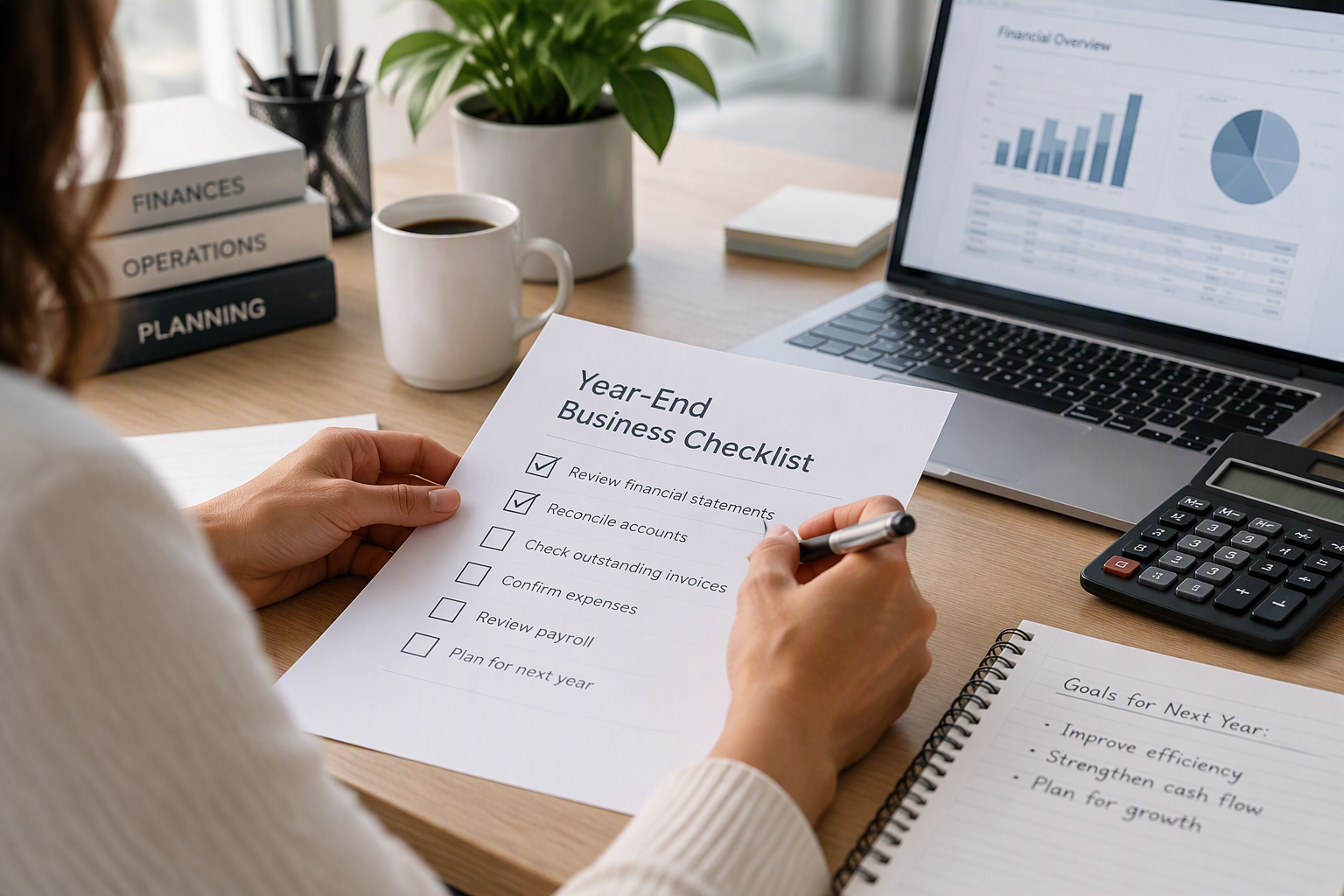
Final year-end records checklist
Before sending records to an accountant, confirm that:
- Income and expenses are supported
- Bank and credit-card accounts are reconciled
- Customer and supplier balances are reviewed
- GST/HST and payroll records are organized
- Major asset purchases and disposals are listed
- Missing documents and unresolved items are identified
- Electronic records are backed up
Completing this year-end records checklist can help identify missing documents and unresolved items before records are provided to an accountant.
Businesses are generally required to retain records for six years from the end of the last tax year to which they relate, unless the Canada Revenue Agency authorizes earlier destruction.
Need guidance for your situation?
Every business has different year-end accounting, bookkeeping, tax, and reporting needs. ACCPAS can help you review your information, identify outstanding items, and understand the next steps that may apply to your situation.
Important: This article provides general information only. Recordkeeping, accounting, and tax requirements can vary based on a business’s structure, activities, registrations, and circumstances. Consult a qualified professional for guidance based on the business’s specific situation.
Sources
- Keeping records. Accessed September 30, 2026
- Business records. Accessed September 30, 2026
- GST/HST and payroll records. Accessed September 30, 2026
- Keeping Records publication. Accessed September 30, 2026